Mupaka Shamba Letu: Building peace through cross-border trade in the Great Lakes
In Africa’s Great Lakes region, where armed conflict and unpredictable customs barriers threaten local livelihoods, the ‘Mupaka Shamba Letu’ (MSL) project helps women cross-border traders organise, access finance, and advocate for change.
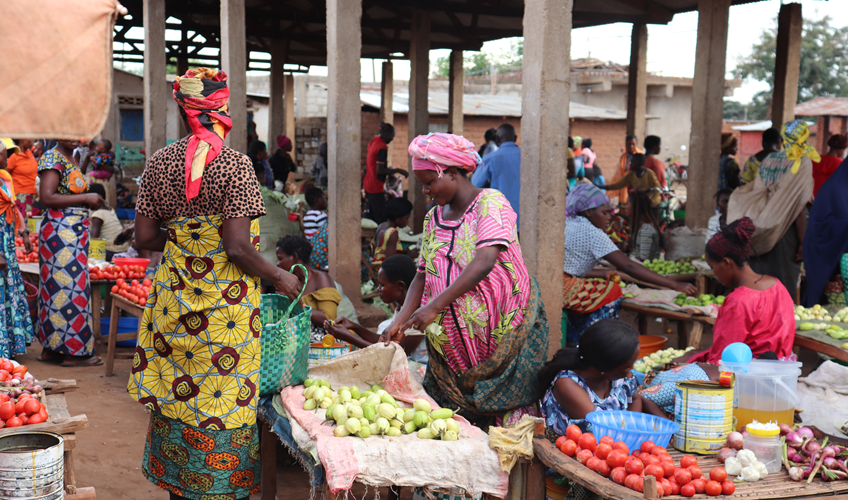
For thousands of families living along the borders of the Democratic Republic of Congo (DRC), Rwanda and Burundi, trade is a lifeline.
Eight out of ten people buying and selling fruits, vegetables and small goods across these borders are women.
Their daily labour does more than put food on the table. In a region where mistrust between communities runs deep and tensions are decades-long, it connects people across lines of conflict and creates vital opportunities for peaceful cooperation. But sustaining this work – let alone unlocking its full potential – is becoming harder. Escalating instability, expansion of armed groups, weak legal protections, and poor coordination between traders are threatening the safety, livelihoods and long-term prosperity of border communities across the Great Lakes.
Mupaka Shamba Letu (Swahili for ‘The Border, Our Livelihood’) project supports women traders to organise, pool funds, and advocate for change – turning the people most affected by conflict into powerful agents of peace. By strengthening livelihoods, supporting local economies and ensuring women have a voice in the decisions that shape their lives, it works to break cycles of conflict and build peace that lasts.
The challenge: trading across one of the world’s most fragile borders
Poverty and marginalisation have long fuelled cycles of violence in the Great Lakes region – where the borders of DRC, Rwanda, and Burundi meet. Decades of armed conflict, displacement, and economic collapse turned it into one of the most fragile and volatile areas in Africa, with active hostilities continuing to disrupt daily life.
Most women cross-border traders in the region work informally, outside official business structures, which means they have little to no legal protection when things go wrong. They face three interconnected challenges:
- Ongoing instability and armed group activity: when conflict escalates, border checkpoints can close without warning and remain shut for weeks. Women also regularly face harassment, intimidation and threats to their safety from armed groups operating in border zones.
- Unpredictable customs barriers: Regulations change frequently, with new documentation requirements and fees (some unofficial) imposed at short notice. Women refused entry can lose an entire month’s income in a single day. Knowledge of their rights is limited, and legal support is rarely available.
- Political exclusion: women have virtually no representation or negotiating power in both traditional and official decision-making structures – meaning that their experiences are not shaping the solutions meant to protect them.
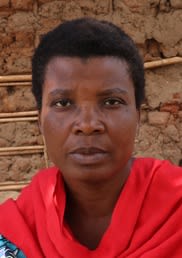
Mathilde Mambo from Bukavu, DRC, sells cassava flour imported from Rubavu, Rwanda:
During the war, people lost everything, and money is not circulating. Sometimes I stay at the market until evening without selling anything, and I can’t even buy bread for my children.”
When women like Mathilde cannot trade, families go hungry. Community ties weaken. And economic exclusion deepens grievances and keeps communities trapped in conditions that fuel further conflict.
What the project does: connecting trade and peace
Economic cooperation builds peace. When women trade together, they create relationships that cross the lines of conflict. Their shared interest in open borders and functioning markets gives communities and governments a practical reason to cooperate.
Mupaka Shamba Letu works across four areas:

The project supports women to form savings groups and cooperatives – community-run financial structures that allow members to pool resources, access small loans, and invest in their businesses. Participants also receive training in financial management and business planning, and can apply for seed funding through competitions the project organises.

Women’s groups are connected into a wider network spanning 11 border points across DRC, Rwanda and Burundi. The network includes a cross-border conflict resolution committee, with members from both sides of each border, and regular public forums where traders can raise concerns directly with local authorities. This builds accountability and trust between communities and the officials.

Women traders don’t just benefit from the project – they use it as a platform for change, advocating for policy reform at local, national and regional levels. Peacebuilding and conflict-sensitivity training is also provided to community leaders, civil society organisations and government officials, helping to reduce inter-community tensions and counter the spread of harmful narratives.

Conflict leaves scars that aren’t always visible. Through community dialogue and trauma-healing sessions, women traders and their family members learn to recognise how stress from years of conflict shapes their reactions and relationships. Working through this together, in safe group settings, has helped ease everyday tensions that could weaken cross-border cooperation.
What makes Mupaka Shamba Letu’s approach unique?
- Targets root causes, not symptoms of conflict: MSL addresses economic inequalities, and political exclusion that fuel violence in the first place
- Locally led: Every implementing partner is a local civil society organisation based in the region. Solutions are designed by the people most affected, which is why they last
- Built to endure: Communities own and sustain savings groups, advocacy networks and conflict resolution committees beyond project cycles
- Inclusive by design: MSL actively reaches traders from marginalised communities who are typically left out of similar programmes – for example, the Twa people of Burundi.
What Mupaka Shamba Letu has achieved so far
Stronger livelihoods
90% of participating women reported increased income – in some cases doubling their earnings – alongside improved skills to manage their businesses, and stronger saving habits.
90% of participating women reported increased income – in some cases doubling their earnings – alongside improved skills to manage their businesses, and stronger saving habits.
More resilient communities
Trust between traders from the region rose from 58% to 74%, and reported harassment at borders dropped from 38% to 55% fewer incidents – concrete signs that cross-border relationships are getting stronger, not just more frequent.
Trust between traders from the region rose from 58% to 74%, and reported harassment at borders dropped from 38% to 55% fewer incidents – concrete signs that cross-border relationships are getting stronger, not just more frequent.
Growing voice and influence
71% of women traders now take part in local mediation – showing women aren’t just trading, they’re leading peace efforts in their communities.
71% of women traders now take part in local mediation – showing women aren’t just trading, they’re leading peace efforts in their communities.
Transformed gender dynamics
Women who participated in mixed dialogue groups alongside their husbands and family members reported improved communication and feeling more included in household decisions.
Women who participated in mixed dialogue groups alongside their husbands and family members reported improved communication and feeling more included in household decisions.
Regional solidarity
Women’s advocacy led to formal cross-border agreements between the DRC and Burundi that protect traders’ rights, including provisions that helped them continue working during the COVID-19 pandemic.
Women’s advocacy led to formal cross-border agreements between the DRC and Burundi that protect traders’ rights, including provisions that helped them continue working during the COVID-19 pandemic.
Wider reach
The project’s database tracks 6,600 women traders and 1,100 young entrepreneurs, capturing changes not just in income, but in savings, access to finance, social relationships, governance participation, and community cohesion over time and giving a fuller picture of how their lives are changing.
The project’s database tracks 6,600 women traders and 1,100 young entrepreneurs, capturing changes not just in income, but in savings, access to finance, social relationships, governance participation, and community cohesion over time and giving a fuller picture of how their lives are changing.
Who implements Mupaka Shamba Letu?
A consortium of International Alert’s partners – local civil society organisations – makes this work possible:
- Actions Des Communautés Unies pour Le Développement Intégral (ACUDI) implements the project in the city of Goma and along the border with the district of Rubavu/Rwanda
- Célébrons le Courage de la Femme (CCF) – responsible for implementing project activities in the cities of Bukavu and Kamanyola and along the border with the district of Rusizi/Rwanda
- Solidarité des femmes de Fizi pour le Bien Être Familial (SOFIBEF) carries out project activities in the city of Uvira and along the border with Gatumba/Burundi
- Association des Femmes Rapatriées du Burundi (AFRABU) implements project activities in Burundi and along the borders with DRC and Rwanda
- Commission Episcopale Justice et Paix (CEJP) – responsible for implementing project activities in the project’s sites in Rwanda and along the borders with DRC and Burundi
Looking ahead: adapting to a changing context
The challenges women traders face are intensifying. Escalating conflict linked to the M23 armed group is accelerating the breakdown of formal agreements between authorities. It is also pushing more traders onto costly, informal transit routes where they face heightened exposure to crime and illegal taxation.
In response, MSL focuses on the following measures:
- Direct cash support and larger loans for women’s savings and credit groups to help traders recover quickly from shocks.
- Funding of shared processing and storage facilities, so cooperatives can move beyond selling raw produce, control their prices, and keep trading across borders despite political tensions.
- Advocacy for the reopening of closed borders, fixed fees and charges instead of current unpredictable ones, and wider adoption of “smart border” technology – such as scanners instead of body searches, information screens instead of manual enquiry desks, and clearer signage for border procedures – to reduce direct contact between traders and officials and the harassment and gender-based violence this can enable.
- Expanding trader-led networks that let women report and document incidents – such as illegal fees, harassment by armed groups and unofficial authorities, or sudden checkpoint closures – so they can be acted on in real time.
For peace and stability in the Great Lakes to become reality, the work to build trust through everyday cooperation needs to reach traders at scale.
You can help us take it further.