
Rwanda
International Alert has been working on peacebuilding in Rwanda since 1996. Our approaches continue to evolve to promote lasting stability and address tensions that shape society today.
We support communities as they navigate complex historic and social realities, particularly addressing the legacies of the Genocide against the Tutsi in 1994. Our efforts include providing mental health and psychosocial support and creating spaces where people can come together to reflect on their experiences and process trauma – both individually and collectively.
Reintegration and reconciliation are at the heart of this work. We bring together survivors, perpetrators, and ex-combatants, recognising that lasting peace requires all parts of a fractured community to come together. We also engage families and young people born after the genocide in honest dialogue about how history shapes memory, identity, and belonging. By doing this, we help communities rebuild trust and break the cycle of unresolved trauma being passed down to future generations.
Alongside our work with communities, we strategically collaborate with national and local institutions to anchor peace in strong systems. Our focus is supporting the government in coordinating peacebuilding efforts in the country, promoting inclusive governance, and integrating conflict sensitivity into public service delivery.
Our programmes also tackle key barriers that limit access to justice for people in Rwanda. Case backlogs, overcrowded prisons, and lack of effective alternatives to court create pressures on the justice system and leave grievances unresolved, thereby threatening understanding and peaceful coexistence. In partnership with justice sector institutions, we promote restorative approaches that rebuild social cohesion while making justice systems faster, fairer and more accessible.
We work with governments and communities across the Great Lakes region to address issues that affect trade, cooperation, and stability in border areas, including poverty, exclusion, and gender inequality. We promote cross-border trade that accounts for local dynamics and protects livelihoods, particularly for women who rely on it most.
Understanding conflict context in Rwanda
Since the 1994 Genocide against the Tutsi, Rwanda has made substantial progress in rebuilding its social fabric, strengthening state institutions, and driving inclusive development. These efforts have delivered real gains across areas such as justice and governance, economic recovery, health and education, gender equality and social cohesion.
At the same time, recovery remains ongoing and complex. The legacies of the genocide continue to shape individual and collective experiences, from intergenerational trauma and shifting identity dynamics to the ongoing need for reconciliation and reintegration.
Rwanda’s position in the Great Lakes region adds another layer of complexity. Recurring instability and cross-border tensions affect daily life, particularly in communities along borders with the Democratic Republic of Congo (DRC) and Burundi. At the same time, emerging challenges such as the spread of misinformation and competing narratives create new fault lines that demand adaptive peacebuilding responses.
In this context, strengthening resilience – in people, communities, and institutions – is not just a goal. It is the foundation for lasting, inclusive, and sustainable peace.
International Alert’s presence and partnerships in Rwanda
Our multidisciplinary team of around 20 staff that combine programme, research, finance, and operations expertise is running four ongoing programmes spanning peacebuilding, access to justice, youth engagement, and cross-border trade. We are primarily based in Kigali, with regular engagement and field presence in border districts such as Rubavu and Rusizi, as well as collaboration across the Rwanda–Burundi–DRC region.
We work in partnership with a range of different organisations, including government institutions, civil society organisations, and research partners. These include, among others:
- National partners: Ministry of National Unity and Civic Engagement (MINUBUMWE), Ministry of Trade and Industry (MINICOM), Ministry of Justice (MINIJUST), the Ministry of Local Government (MINALOC), the Institute of Legal Practice and Development (ILPD);
- International, regional and local civil society partners, such as: Initiatives for Peace and Human Rights (iPeace), Pole Institute, Episcopal Commission of Justice and Peace (CEJP RWANDA), ARCT-Ruhuka, Le Réseau Interdiocésain de Microfinance (RIM), Association of Cross-border Traders of Rwanda (ACTR), AEGIS Trust, Interpeace, Never Again and others.
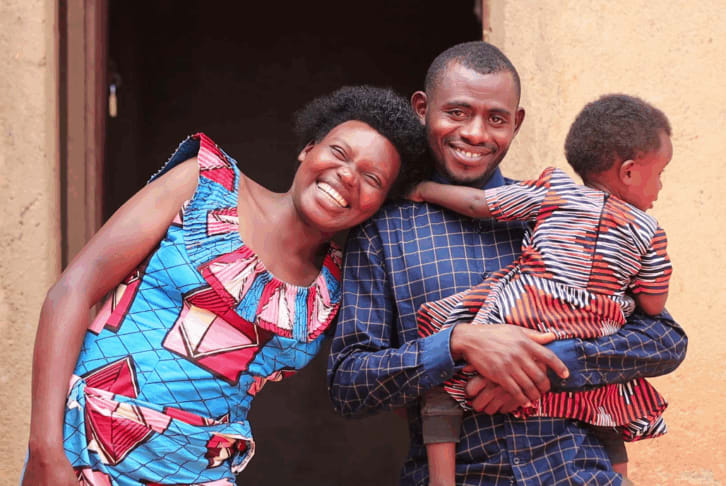
The hidden burden of peace: what Rwanda’s youth are carrying
In Rwanda, 32 years on from the 1994 Genocide against the Tutsi, the hard-won progress to reconcile communities and build unity is nothing short of remarkable. But healing needs more than reflection. It also means helping people make sense of what is happening to their country and communities in the present day – and keeping everyone committed to a peaceful future. For today’s young Rwandans, that task has its own challenges – Ariane Inkesha explains.


Get in touch with our Rwanda team


