DRC
We have supported peacebuilding and conflict prevention in eastern Democratic Republic of Congo (DRC) since 2002. Our team of 60 people works across Kinshasa, Goma, Bukavu, Beni, Bunia, and Kalémie.
Our programmes foster inclusive peace processes and decision-making, build social cohesion, and improve analysis and understanding of conflict dynamics.
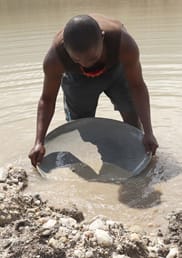
To achieve these goals, we focus on several key areas. We support young people to take leadership roles in governance and peacebuilding, encourage open dialogue between communities and leaders, help resolve conflicts over management of natural resources such as land, critical minerals and gold, strengthen regional ties through cross-border trade, and engage the private sector in promoting peace and equitable economic development.
We train and support grassroots groups to influence high-level decision making. We partner with communities to understand the pressures they contend with, develop local solutions to build trust and prevent conflict escalation, and share their vision for peace with high-level decision makers.
We also work with the DRC government and its international partners to push for analysis-driven policymaking that responds to the needs of those most affected by conflict.
We are currently implementing eight projects alongside our international and national partners:
- Access to Justice – a cross-border initiative supporting communities living and working at the borders between Burundi, DRC and Rwanda to resolve conflicts and to have access to justice support through legal aid clinics
- Mupaka Shamba Letu (Our Border, Our Livelihood) – our flagship cross-border trade project strengthening social cohesion through regional trade integration
- Kizazi cha Amani (Youth Generation for Peace) – our project working with young peace activists across the region to build understanding and support each other through common peace initiatives
- Madini kwa Amani na Maendeleo (Minerals for Peace and Development) – a cutting-edge initiative supporting artisanal mining communities to address insecurity and set a common vision for the development of their communities
- Nashiriki kwa Masikilizano – our project focused on strengthening social cohesion across Ituri and North Kivu in eastern DRC, and building trust between community members and with authorities
- Improving the capacity of young people and civil society to engage for peace in eastern DRC – a project working with youth networks and movements in Beni, North Kivu, to have their say on social, economic, and political issues that matter to them
- Tuote Kesho (Elevating Women’s Voices for a Peace Agenda in the Great Lakes) is helping women traders across the Great Lakes region to get their voices heard in regional decision-making platforms
- Mental Health and Psychosocial Support for Peace is supporting communities in Tanganyika province in building stronger social ties, improving their living conditions and getting access to mental health services.
We are the hosts of the Conflict Sensitivity Hub in the DRC – an expertise centre that trains and supports humanitarian, development and peace organisations to understand and apply a conflict-sensitive approach in their interventions.
- iPeace
- Pole Institute
- Bukavu Comedy Club
- Action des Communautés Unies pour le Développement Intégral (ACUDI)
- Solidarité des Femmes de Fizi (SOFIBEF)
- Celebrons le Courage de la Femme (CCF)
- Forum des Mamams de l’Ituri (FOMI)
- Fleuves d’Eau Vive qui Coulent aux Autres (FLEVICA)
- Heritier du Developpement au Congo (HDC)
- Mwangaza Peace (M-PEACE)
- Appui à la Communication Interculturelle et à l’Auto promotion Rurale (ACIAR)
- Centre d’Initiatives et de Créativité pour la Promotion Rurale (CIC-ASBL)
- Bureau des Etudes Scientifiques et Techniques
- Justice Plus
- Observatoire Gouvernance et Paix (OGP)
- International Peace Information Service (IPIS)
- Programme national de santé mentale du ministère de la Santé (PNSM)
- Commission diocésaine de justice et de paix de Kalemie Kirungu (CDJP)
Understanding conflict context in the DRC
The current situation in eastern DRC is rooted in decades of regional conflict in the Great Lakes area of central Africa, dating back to the 1990s. Divisions between different ethnic groups, many tracing back to the colonial period, fuelled successive wars, including the First and Second Congo Wars. These conflicts left millions dead, caused mass displacement, weakened state institutions, and created a legacy of instability that persists today.
Different political and economic elites have, over the years, lost or gained local government roles or economic opportunities, sometimes mobilising armed groups to pressure rivals and consolidate power.
In the Great Lakes region, access to and interaction with land are central to people’s identities and crucial to their economic survival. However, repeated waves of displacement have put severe pressure on resources, driving competition that escalates into violence.
Against this backdrop, tensions between generations and unresolved memories of past violence continue to shape how conflict is experienced and understood. Young men and women particularly struggle to adapt in this turbulent context. Forced to take on adult responsibilities, they remain largely excluded from decision-making spaces dominated by traditional leaders.
The vast distance between the east and decision-making authorities in the capital, Kinshasa, hinders inclusive governance. Many long-term structural conflicts often require national government action – such as legal reforms or better law enforcement. While some decisions are decentralised, most of them stall as central authorities handle competing requests from all 26 provinces. This stagnation allows local conflicts to develop and multiply and overwhelms community-level efforts to manage them.
Since January 2025, armed conflict involving M23/AFC* rebel groups in eastern DRC has escalated significantly. It is one amongst many ongoing conflict dynamics in the country, which risks eroding trust within and between communities across the region, as well as between communities and decision-makers. Tensions between countries, including accusations of external interference and cross-border security threats, impact regional security in the Great Lakes. Economic interests in minerals and trade routes add to these challenges. In this context, the risks of reopening unhealed wounds and generating new cycles of trauma are high.
There are widespread impacts. Nationally, the humanitarian crisis is worsening, and social cohesion is under strain. Regionally, the risk of escalation and destabilisation is rising. Internationally, concerns about security, supply chains, and stability in the Great Lakes region are growing.
*The M23 (March 23 Movement) is a paramilitary group allied to the Alliance Fleuve Congo. They claim to fight for the rights of minority groups – specifically to protect Congolese Tutsi interests – against other armed groups. They have been taking territory since November 2021, in January 2025 took control of Goma, the strategic provincial capital of North Kivu and a commercial hub for the region, and some weeks later also took control of Bukavu, the provincial capital of South Kivu, on the border with Rwanda. Alliance Fleuve Congo is a broader movement that is calling for political change in Kinshasa.





Get in touch with our DRC team