
Nashiriki Kwa Masikilizano: Rebuilding trust across eastern DRC
In remote areas of Ituri and North Kivu Provinces in eastern Democratic Republic of Congo (DRC), decades of unresolved conflict over power, identity, and land have fractured communities, undermined local governance and opened space for armed groups.
The Nashiriki Kwa Masikilizano (Swahili for ‘Participate to Reconcile’), or simply Nashiriki, helps local communities find practical, inclusive ways to address the violence and mistrust that continue to define daily life.
Current context
Three interconnected issues drive instability in Ituri and North Kivu: historical ethnic divisions, economic and social marginalisation, and governance gaps.
For years, communities have lived with the trauma of ethnically motivated violence – village raids, arson, cattle theft, rape, and killings that have made reconciliation between neighbours feel impossible.
Without effective local authorities, communities struggle to resolve disputes peacefully or hold perpetrators to account. Longstanding exclusion of young people and women from decision-making makes this worse. When leaders make choices that affect entire communities without engaging all voices, trust erodes further, and disenchantment can tip into disengagement or active opposition.
This governance vacuum creates openings that armed groups actively exploit to expand their presence. Groups like the Allied Democratic Forces (ADF) have historically used local tensions in Ituri to recruit fighters, stir up attacks, and prevent communities from uniting against them. Fear and rumour deepen mistrust between neighbours who increasingly question whose side the other is on.
The consequences for livelihoods are severe. Displacement has forced families off their land and into poverty. For young people especially, the collapse of economic opportunity – combined with growing up surrounded by violence and narratives of “the other” as the enemy – means that armed groups can appear to offer the only available source of income, protection, or identity. Without intervention, this cycle risks perpetuating instability across generations and beyond the region.
How Nashiriki works
Evidence from our work in conflict-affected communities shows that when trust is rebuilt across society, it directly interrupts cycles of violence. By bringing people together through inclusive dialogue and shared activities, Nashiriki tackles the roots of conflict and repairs the social fabric it has torn apart. Crucially, the project amplifies voices that conflict and exclusion have long silenced and elevates historically disenfranchised people at the centre of peace efforts.
Nashiriki works across three mutually reinforcing tracks, giving communities ownership of their peace efforts.

Nashiriki establishes dialogue groups and public forums – safe, facilitated spaces where people from different backgrounds can share concerns openly and find common ground, both horizontally within communities and vertically with authorities. It also provides training on how to resolve conflicts peacefully, govern inclusively, manage land fairly, and understand the roles of the army and police. Dedicated mental health support helps communities to process the weight of violence and start trusting one another again.

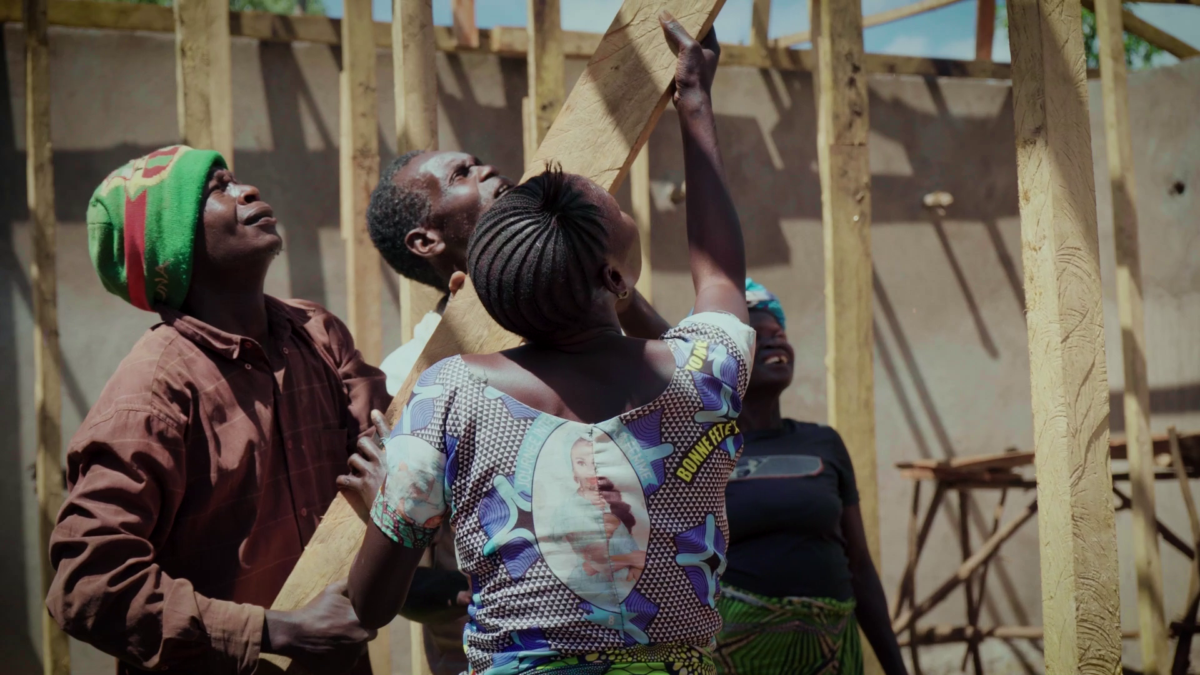
The project supports initiatives to build shared facilities – youth centres and community spaces – that serve everyone. Working together on something tangible and visible is itself an act of reconciliation: it builds relationships while creating lasting infrastructure that communities own.

Nashiriki inspires local leaders to organise inclusive activities – football matches, community clean-ups, and cultural events. This creates relaxed, collaborative spaces where people can build positive relationships with one another and with local authorities, including the army and police.
What Nashiriki has achieved so far
90 peacefully settled local disputes
a success made possible through sustained efforts of 25 community dialogue groups with 500 members
a success made possible through sustained efforts of 25 community dialogue groups with 500 members
500+ people
including local leaders, civil society organisations, women’s groups, and young people, now have practical skills to resolve conflicts, hold decision-makers accountable, and spot tensions early.
including local leaders, civil society organisations, women’s groups, and young people, now have practical skills to resolve conflicts, hold decision-makers accountable, and spot tensions early.
11 community infrastructure projects
such as rebuilt water points, markets, public lighting, and two new youth halls benefitted over 29,000 people, gave young people paid work, and provided a reason to meet and collaborate after years of division.
such as rebuilt water points, markets, public lighting, and two new youth halls benefitted over 29,000 people, gave young people paid work, and provided a reason to meet and collaborate after years of division.
250+ young peace ambassadors
from six youth peace networks are helping bring communities together and easing tensions with local authorities and security forces.
from six youth peace networks are helping bring communities together and easing tensions with local authorities and security forces.
25 women’s organisations
now have a stronger voice in shaping peace efforts and decisions – with the skills, resources and confidence to participate in mediation and conflict prevention efforts that used to happen without them.
now have a stronger voice in shaping peace efforts and decisions – with the skills, resources and confidence to participate in mediation and conflict prevention efforts that used to happen without them.
1.3 million people
reached through 129 radio programmes spreading stories of peace and unity and countering rumour and division.
reached through 129 radio programmes spreading stories of peace and unity and countering rumour and division.
Who implements Nashiriki?
Nashiriki is delivered by a consortium of international and local organisations, each covering specific territories and ensuring solutions are shaped by people who understand the local context:
- Norwegian Refugee Council (NRC), lead partner (Ituri and Nord-Kivu)
- International Alert (Ituri), in partnership with five local civil society organisations:
- Appui à la Communication Interculturelle et à l’Autopromotion Rurale (ACIAR), Irumu territory
- Fleuve d’Eau Vive qui Coule aux Autres (FLEVICA), Mahagi territory
- Forum des Mamans de l’Ituri (FOMI), Djugu territory
- Héritier du Développement au Congo (HDC), Mambasa territory
- Mwamngaza Peace (M. Peace), Aru territory
- Search For Common Ground (Ituri)
- Justice Plus (Ituri)

Get in touch with our DRC team
