
From borders to bridges: Access to justice in the Great Lakes region
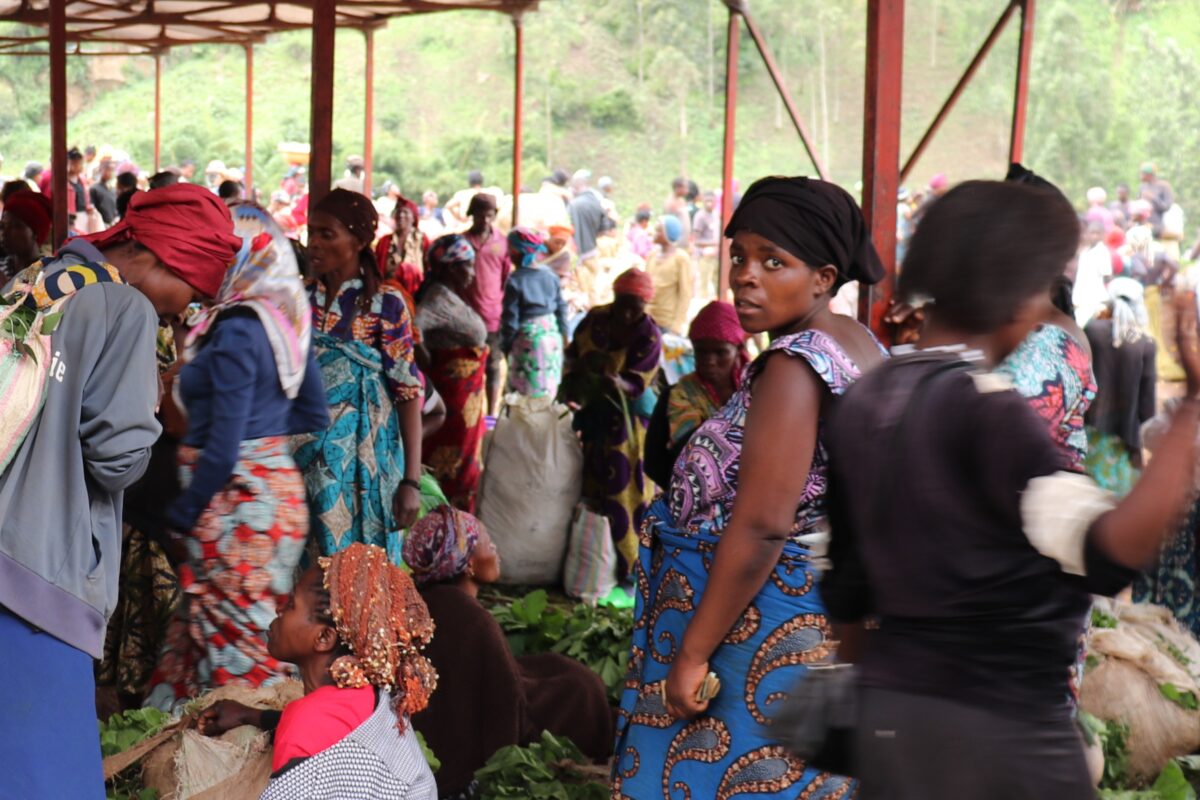
Every morning, thousands of traders and day labourers cross the borders between Rwanda and the Democratic Republic of Congo (DRC). Mostly women, they carry beans, tomatoes, clothing, and household goods – small loads that sustain more than 50,000 livelihoods and drive economic growth within the Great Lakes region. Alongside them moves a very different group: asylum seekers and migrants fleeing violence, family separation, or persecution – people not crossing for profit, but for survival.
While these two groups use the border for different reasons, they share the same border infrastructure, the same checkpoints, and the same legal vulnerabilities: document disputes, arbitrary arrests, and extortion by border officers. And, when something goes wrong, neither group has anywhere to turn.
The Access to Justice project exists to change that.
The context: legal challenges in the Great Lakes Region
The DRC-Rwanda border is not a single line, but two overlapping systems increasingly challenged by regional instability. Formal crossings at Goma/Gisenyi (the Grande Barrière and Petite Barrière), and the crossings at Bukavu/Rusizi, are the official entry points that require people passing through to have valid identity documents and to pay fees. Even in calmer periods, long queues and delays are common, and over 60% of legal issues at the border are related to documentation.
New migration requirements are frequently introduced without prior notice, meaning workers only discover they are non-compliant when they are already at the checkpoint. Many do not realise they have violated any regulation at all. Border officials on both sides often exploit this vulnerability. Traders are routinely charged unofficial fees by agencies that are meant to provide services, not extract revenue.
A broken passport scanner, an arbitrary stop, or an unexplained queue can cost a worker their entire day’s income, with no mechanism to make a complaint. Without valid documents, people cannot challenge extortion, claim unpaid wages, or access labour protections if injured while working across the border.
Informal crossings – on foot or by boat at unmonitored points along the Rusizi River – are the daily reality for thousands more. While crossing informally is not always illegal, particularly for people seeking asylum, it strips them of the paperwork needed to access refugee registration, legal aid, healthcare, or education. Those who cross informally also risk being treated as criminals or suspected spies, detained by local authorities, or pressured to return to their country of origin – which many take as a denial of their refugee status.
The recent escalation of armed conflict in eastern DRC has made this worse. Border closures, the suspension of consular services, and mass displacement through informal routes have left hundreds of thousands of people legally invisible – present in a country but unrecognised by formal institutions. That invisibility makes them more vulnerable: easier to exploit, recruit, and mobilise by those who gain from ongoing instability.
Why does Access to Justice matter?
In a region shaped by decades of tension, unresolved grievances over land, wages, or border crossings can quickly tip from frustration into wider conflict. Without affordable, accessible legal mechanisms, mistrust deepens, resentment toward state institutions grows, and the space for resolving tensions peacefully shrinks. This also creates fertile ground for manipulation by groups that benefit from division.
When people learn about their rights, when they can obtain affordable legal aid, and when justice systems work together, communities become better equipped to resolve disputes without resorting to violence.
Currently, there are not enough mechanisms that enable collaboration between Rwandan and Congolese justice systems – a gap that facilitates ill-treatment on both sides. Access to Justice addresses this comprehensively and at multiple levels: combining direct legal support with longer-term systemic change.
Discover key elements of the project’s approach below.
Affordable legal support
Legal clinics offer free or affordable consultations open to everyone who crosses the border, regardless of nationality, gender, disability, or legal status. Services include legal advice, court representation, help with submissions and documents. Clinics also train users on Rwanda’s Integrated Electronic Case Management System (IECMS)*.
Legal clinics offer free or affordable consultations open to everyone who crosses the border, regardless of nationality, gender, disability, or legal status. Services include legal advice, court representation, help with submissions and documents. Clinics also train users on Rwanda’s Integrated Electronic Case Management System (IECMS)*.
Improving rights awareness
Rights awareness sessions ensure that border communities understand their legal rights and obligations before problems arise – reducing the number of people caught off guard by documentation requirements they were never told about.
Rights awareness sessions ensure that border communities understand their legal rights and obligations before problems arise – reducing the number of people caught off guard by documentation requirements they were never told about.
Stronger collaboration between justice and security sectors
Coordination with justice and security institutions – including ministries of justice and border agencies on both sides – ensures that when security actors encounter someone in legal difficulty, they can refer them directly to a legal clinic rather than leaving them without support.
Coordination with justice and security institutions – including ministries of justice and border agencies on both sides – ensures that when security actors encounter someone in legal difficulty, they can refer them directly to a legal clinic rather than leaving them without support.
Supporting community mediation
Out-of-court mediation and dialogue (also known as Alternative Dispute Resolution) gives communities a way to resolve disputes through structured conversation rather than litigation.
Out-of-court mediation and dialogue (also known as Alternative Dispute Resolution) gives communities a way to resolve disputes through structured conversation rather than litigation.
Advocating for changes in policy and practice
Community, national and cross-border advocacy brings together justice actors, civil society, and policymakers from Rwanda, DRC, Uganda, Burundi, and Kenya to develop shared solutions.
Community, national and cross-border advocacy brings together justice actors, civil society, and policymakers from Rwanda, DRC, Uganda, Burundi, and Kenya to develop shared solutions.
Investing in young people
The Alternative University (Université des Grandes Vacances) brings together young people from the region for structured dialogue on justice and peacebuilding, so that they can effectively counter the manipulation and disinformation on both sides of the border.
The Alternative University (Université des Grandes Vacances) brings together young people from the region for structured dialogue on justice and peacebuilding, so that they can effectively counter the manipulation and disinformation on both sides of the border.
*IECMS is an online platform that unifies all Justice, Reconciliation, Law and Order sectors and allows users to check case status, hearing dates, and key documents without travelling to court in person.
Access to Justice’s proven results
- Local leaders report a significant reduction in people resorting to criminal acts in response to the border issues (such as taking revenge for injustice), as the population is well informed of their rights and obligations and frequently consults legal clinics and project lawyers.
- In communities with established dialogue mechanisms, local leaders report a reduction in both the number of small-scale conflicts and the time taken to resolve disputes peacefully.
- Noticeable decrease in harassment by border service agents toward people crossing the borders.
- Despite ongoing tensions in the Great Lakes Region, both DRC and Rwandan government authorities actively co-design and participate in the project’s activities – a sign of genuine commitment and the project’s relevance.
- Improved collaboration between legal and security systems, including referrals to legal clinics.
What’s next?
Authorities in the DRC and Rwanda want to see the project expand to other border and non-border areas, as well as to the DRC-Burundi and DRC-Uganda corridors, where communities are requesting similar support. The next phase will deepen community mediation, strengthen cross-border justice dialogue, and invest in training for local leaders, border officials, women’s networks, and youth in conflict resolution and trauma-informed approaches.
Where legal systems divide people, Access to Justice builds the bridges that connect them.
Who supports Access to Justice?
- International Alert (DRC and Rwanda): conflict prevention, political engagement, advocacy, ministerial support.
- iPeace (DRC and Rwanda): Conflict prevention, free legal assistance, and capacity building for justice actors and administrative authorities.
- Pole Institute (DRC and Rwanda): Prevention (radio activities + alternative university for youth), peaceful conflict resolution (mediation), and rebuilding trust in public authority.
