Security

Rehabilitation of Nepali ex-combatants

What role for the private sector?

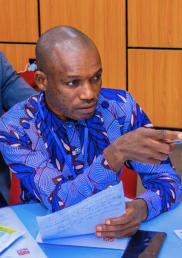
Acknowledging that the rehabilitation of ex-combatants is critical to sustainable peace in Nepal, which is in turn crucial for long-term economic development, a recent workshop of private sector leaders in Kathmandu resulted in a display of willingness and openness towards providing support to ex-combatants, when and as required by the government and political parties.

Bhasker Kafle
Dom, 26/09/2010

International engagement in the Georgian-Abkhaz conflict resolution process

Alert’s new publication

International Alert is proud to present our new publication on "International Engagement in the Georgian-Abkhaz Conflict Resolution Process", a collection of papers from Georgian and Abkhaz researchers analysing the effectiveness of international engagement in the Georgian-Abkhaz conflict resolution process, with a specific focus on the post-August 2008 period.

Juliet Schofield
Lun, 27/09/2010

Exploring how responsing to climate change can build peace and security in South Asia

Regional experts meet in Kathmandu

In the lead-up to the next global summit on climate change in Cancun, Mexico, International Alert along with the Delegation of the European Union in Nepal held a dialogue on climate change, security and governance on 3rd September 2010 in Kathmandu.

Janani Vivekananda
Mié, 29/09/2010

Socio-Economic Reintegration Of Ex-Combatants

Understanding And Addressing Key Challenges
Charlotte Watson
Diciembre, 2009
International Alert
24 pages
London, UK
978-1-906677-60-2

International Alert is seeking to build on previous initiatives to inform and advance EU thinking on the reintegration of ex-combatants into post-conflict societies and economies. This is the second of two briefing papers produced as part of a year-long initiative aimed at reinvigorating the debate on reintegration. Based on research in Burundi, Liberia and Nepal, it discusses why the lessons of past reintegration programmes are not being learned and what implications this has for future EU disarmament, demobilisation and reintegration (DDR) programming.

This paper discusses why the lessons of past reintegration programmes in Burundi, Liberia and Nepal are not being learned and what implications this has for future EU disarmament, demobilisation and reintegration (DDR) programming.

Publication Image

Building Peace, Security & Development in Africa: Taking Forward European Union (EU) Commitments to Conflict Prevention

International Alert, Saferworld
Febrero, 2003
International Alert, Saferworld
4 pages
London, UK

Africahas suffered a total of one third of global armed conflicts over the past decade. The bottom 27 countries in the UNDP’s human development index are African and there are an estimated 6.1 million refugees and 20 million internally displaced persons across the continent. Now, more than ever, an effective EU-Africa partnership is required to address the underlying and proximate causes of conflict, insecurity, instability and underdevelopment to effect a demonstrative, positive and sustainable impact on the ground.

This is a briefing by Saferworld and International Alert to the EU-Africa Summit 2003 in Lisbon

Publication Image

Small Arms Control in The Black Sea Region (MISAC)

Suzette Grillot
Diciembre, 2003
International Alert
48 pages
London, UK

This report aims to map the small arms control practices in five countries of the Black Sea region (which, for the purposes of the report, include Bulgaria, Moldova, Romania, Turkey and Ukraine). This is the area which has been serving as one of the hubs for arms proliferation, with both legal and illegal arms transfers taking place.


This report, Small Arms Control in the Black Sea Region, is the second in a series of assessments published by International Alert to support the exchange of knowledge and information about small arms controls in Eastern Eurasia.

Publication Image

Control de Armas Pequeñas en el Mercosur (MISAC)

Small Arms Control in MERCOSUR (MISAC)
Pablo Dreyfus
Carolina Iootty de Paiva Dias
Benjamín Lessing
William Godnick
Octubre, 2003
International Alert
68 pages
London, UK
1-898702-34-9

El presente informe documenta los mecanismos e instituciones relevantes al control de armas pequeñas en MERCOSUR incluyendo los dos países asociados, Bolivia y Chile. Con la excepción de Brasil, donde la cuestión de armas pequeñas es una prioridad en el ámbito de políticas públicas, está en el centro del debate político y es un tema asumido como urgente por una sociedad civil activa y movilizada, en el resto de la región MERCOSUR el control de las armas pequeñas es una cuestión que está todavía subsumida dentro de la preocupación general de la seguridad pública o seguridad ciudadana.

El presente informe documenta los mecanismos e instituciones relevantes al control de armas pequeñas en MERCOSUR incluyendo los dos países asociados, Bolivia y Chile. Este documento también está disponible en Inglés.

Publication Image

EU Security Strategy

The Implications for EU Conflict Prevention
International Alert
Saferworld
Enero, 2004
International Alert, Saferworld
18 pages
London, UK

The European Security Strategy (ESS) commits the EU to using a wide range of instruments in order to prevent violent conflict. Its comprehensive nature is one of its strengths, however, greater analysis of how the EU’s “hard” and “soft” instruments will be applied during the implementation of the Strategy is needed. There is the risk that Member States will pay increasing attention to developing military aspects of the Common Foreign and Security Policy, rather than civilian, and preventive responses, without which, military engagement is counter-productive.


The paper assesses the EU Security Strategy from a conflict prevention perspective, highlighting its relationship with the EU Programme for the Prevention of Violent Conflicts, endorsed by the Goteborg European Council in June 2001. It provides practical recommendations on how conflict prevention can be better implemented via the Security Strategy over the next year.

Publication Image

Small Arms Control in Eurasia (MISAC)

Stephanie Cooper
Michael von Tangen Page
Helena Vàzquez
Lada Zimina
Enero, 2004
International Alert
63 pages
London, UK

Over the last ten years the states in the region have had different capacities and different motivations to deal with the SALW issues, and understandably have made different levels of progress in addressing them. As post-Soviet transition states have stabilised, their ability to enforce their international obligations with relation to the export of SALW has improved. The restructuring processes in the defence industries of these states as a result of the end of the Cold War have meant that the number of weapons being produced in this area has reduced.

The key issues addressed in this broad overview are the relevant treaties and international instruments relating to SALW; which of them have been adopted by the countries under study and what are the achievements and areas of concern for these countries in implementing these international instruments.

Publication Image

Strengthening Global Security Through Addressing the Root Causes of Conflict

Priorities for the Irish and Dutch Presidencies in 2004
International Alert
Saferworld
Febrero, 2004
International Alert, Saferworld
68 pages
London, UK
1-904833-02-0

Conflicts in Iraq and Afghanistan, and the continued threat posed by terrorist organisations, have presented significant security challenges to the international community.

The aim of this document is to highlight practical steps that the EU could take to better link the progress being made with its developing European Security and Defence (ESDP) operations and crisis management with longer-term conflict prevention. The paper outlines four key areas for the EU Member States, officials in the Council and the Commission to address to enhance the EU’s capacity to prevent violent conflict.

Publication Image

Small Arms Control in Ghana, Nigeria and Senegal (MISAC)

Christiane Agboton-Johnson
Adedeji Ebo
Laura Mazal
Marzo, 2004
International Alert
50 pages
London, UK

This report seeks to document governmental and civil society activity in Ghana, Nigeria and Senegal with regard to the control of SALW. The case studies provide an overview of the main sources of SALW proliferation. The report also aims to assess the current national legislation on SALW, the implementation of SALW control policies, as well as the role of national governmental and nongovernmental structures in addressing the issue of SALW proliferation in the three countries.

This report seeks to document governmental and civil society activity in Ghana, Nigeria and Senegal with regard to the control of SALW.

Publication Image

Small Arms Control in Central Asia (MISAC)

John Heathershaw
Emil Juraev
Michael von Tangen Page
Lada Zimina
Abril, 2004
International Alert
35 pages
London, UK

This report is a mapping of the situation regarding the control of small arms and light weapons (SALW) in three Central Asian Republics: Kazakhstan, Kyrgyzstan and Tajikistan. Despite a number of potentially escalating factors, such as authoritarian governance, poverty, ethnic tensions, corruption and resource competition (especially over land and water), Central Asia has remained largely peaceful, with the exception of the 1992-97 civil war in Tajikistan and a number of small-scale clashes, mostly in the Ferghana Valley and the bordering areas.

This study examines the activities and identifies the organisations that have been involved in the work against the illicit trafficking of small arms, following the July 2001 UN Conference on the Illicit Trade of Small Arms and Light Weapons in all its Aspects.

Publication Image

Building Institutional Capacity for Conflict-Sensitive Practice

The Case of International NGOs
Maria Lange
Mayo, 2004
International Alert
44 pages
London, UK
1-898702-45-4

In the post-Cold War period, the nature of conflicts has changed, with conflict moving closer to civilians as combatants, victims or (perceived) supporters of one or the other faction. International development and humanitarian NGOs that seek to address the needs of civilians have become operational in more war zones than ever before and, while conflict has always been a pervasive feature of their work in many areas of the world, they have become more aware of the inevitable two-way relationship between conflict and their programmes, staff and partners.

This report looks at the factors that drive international development organisations towards or away from integrating conflict analysis into their programming.

Publication Image

Natural Resource Exploitation and Human Security in the Democratic Republic of Congo

Seminar Report
International Alert
Pole Institute
Junio, 2004
International Alert, Pole Institute
24 pages
London, UK
1-898702-51-9

The Democratic Republic of Congo (DRC) is immensely rich in natural resources but its people are among the poorest in the world. This paradox is both cause and effect of the brutal exploitation of the country’s resources that has taken place since King Leopold, and that has fuelled such violent and devastating conflict.

The report is organised in three parts: first, summaries of the seminar presentations and plenary discussions; then analysis of the issues discussed and some conclusions; lastly a sketch of relevant policy actors and processes, with a view to further research and advocacy.

Publication Image

Small Arms Consultative Group Process. Small Arms and Light Weapons Transfers

Developing Understandings on Guidelines for National Controls and Transfers to Non-State Actors
International Alert
Saferworld
University of Bradford
Agosto, 2004
International Alert, Saferworld, University of Bradford
20 pages
London, UK
1-898702-58-6

The informal Small Arms Consultative Group Process on Developing Understandings on Guidelines for National Controls and Transfers to Non-State Actors was established in January 2003, convened by the Biting the Bullet Project. The Consultative Group consists of representatives of some 30 governments from most regions, the UN and regional organisations, and selected civil society experts. It has so far met four times, in London (January 2003), Prague (June 2003), New York (July 2003) and Lake Naivasha, Kenya (September 2003), and has now completed the first phase of its work.


The objectives of this informal Small Arms Consultative Group have been to develop shared understandings of two linked issue areas that are of key importance to the implementation and further development of the UN Programme of Action on Small Arms and Light Weapons: transfers of SALW to non-state actors and guidelines for national decisions on whether to authorise weapons transfers.

Publication Image
Contenido sindicado