
Project: Powering Peace Through Climate Action – Nigeria
Community-led climate action, sustainable livelihoods and peacebuilding in Benue and Sokoto states
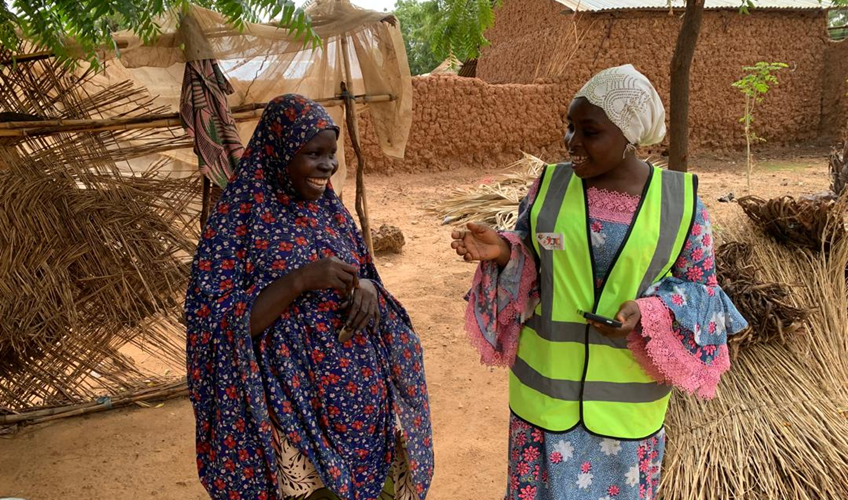
Prior to now I was not so active in the community, but now I’m active with my farm and I’m able to resolve conflicts through the knowledge I’ve gained.
– Zainab Aliyu, PPCA project participant
Climate change is not a distant concern in northern Nigeria. Communities are experiencing unpredictable rainfall, lower crop yields, less water, environmental damage, and growing pressure on limited natural resources.
In places where livelihoods depend on farming, herding and fishing, these changes affect not only economic security but also relationships between communities who rely on the same resources to survive. Climate pressures are deepening tensions and contributing to conflict in areas where environmental stress combines with weak governance, displacement and social exclusion.
The Powering Peace Through Climate Action (PPCA) project, which also runs in Kenya, responds to this challenge by linking climate adaptation with peacebuilding. It places communities at the centre of climate action and supports locally led solutions that strengthen resilience, reduce conflict risks and promote peaceful coexistence.
The context
Benue State in north central Nigeria and Sokoto State in the northwest face climate-related risks, including drought, flooding and land degradation. Sokoto lies within Nigeria’s semi-arid Sahelian zone, while Benue falls within the Southern Guinea Savanna ecological zone.
Climate change is increasing temperatures, causing more erratic weather patterns, and reducing crop yields. The impact on traditional livelihoods presents ongoing challenges for local herding, farming and fishing communities. At the same time, environmental damage, population growth, and unsustainable practices such as tree felling are putting even more pressure on already limited natural resources.
Food shortages and economic hardship are forcing people to move in search of water and grazing land. Long-standing disputes over land and natural resources sometimes turn violent. Clashes over diminishing availability of productive land have displaced half a million people in Benue state alone.
Banditry, kidnapping and the presence of armed groups are ongoing security challenges across northern Nigeria. These risks are heightened as communities adapt to changing weather patterns. Economic hardship makes it harder for communities to cope with shocks such as extreme weather or violence. Travelling to markets can be dangerous, leaving people more isolated and limiting economic opportunities. Young people often struggle to make a living and are targeted for recruitment by armed groups.
How PPCA works
PPCA works across communities in Benue and Sokoto states through:
Safe spaces are provided for residents and local authorities to come together to discuss environmental challenges and agree practical responses.
Community experience connects with wider legislative action, including engagement around the Benue State Climate Change Bill.
Local leaders gain the knowledge and skills they need to understand climate-related challenges, contribute to community solutions, and manage conflicts peacefully through alternative dispute resolution (ADR) techniques.
Community events, media engagement and radio campaigns help to raise awareness around climate action and peacebuilding.
Phase 1 ran from 2022-2024. It focused on participatory approaches to facilitating dialogue over shared challenges, improving conflict sensitive climate policies and promoting learning and action on policy.
Phase 2 runs until 2027. It builds on this learning to strengthen climate resilience through further community dialogue, climate leadership platforms, policy engagement and practical local action.
What PPCA has achieved
At community level PPCA supports women and youth climate leadership platforms and promotes climate-smart agricultural techniques and sustainable livelihoods. Women and youth climate leadership platforms help participants build knowledge, strengthen advocacy skills and contribute to community-led solutions. This led to community-based Local Peace and Adaptation Plans and the establishment of state level advisory committees.
In Sokoto State, for example, Zainab Aliyu, a 25-year-old mother of three and Chairperson of the Women Inclusive Platform, has used the project to strengthen her leadership and improve her livelihood.
In Benue state, inclusive community dialogue sessions have improved cooperation between and within communities on climate adaptation. Residents, including women and young people, are able to express their concerns and discuss solutions, including around deforestation, bush burning, environmental degradation, displacement and competition over natural resources.
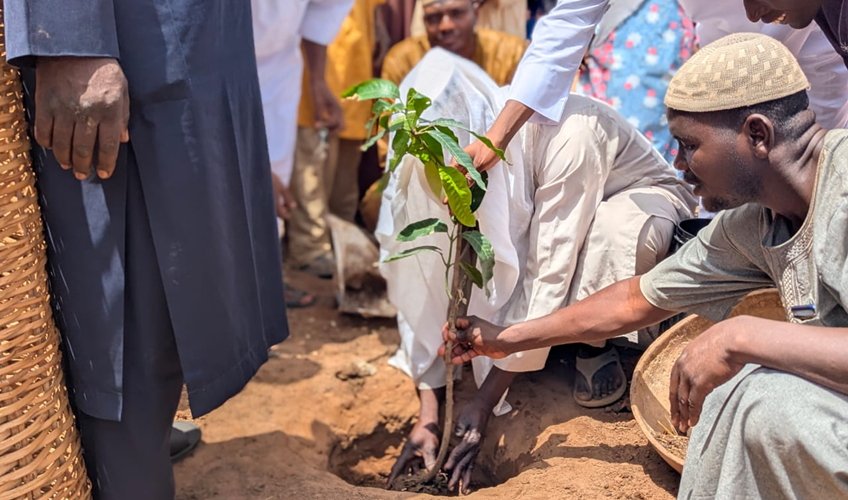
One visible demonstration of community commitment took place during the commemoration of World Environment Day 2026 in Naka. Community members, traditional rulers, local government representatives and other stakeholders came together to stress the importance of community ownership and collective responsibility in protecting natural resources. 370 trees were planted across Naka and Aondona, symbolising collective commitment to environmental restoration and a more climate-resilient future.
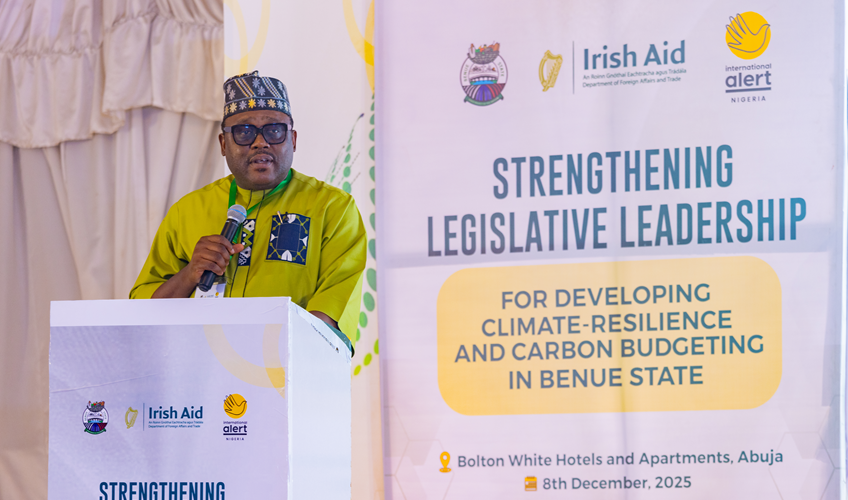
Alongside community-level work, PPCA supports climate governance, policy engagement and public awareness-raising. The project supported the establishment of climate action and peacebuilding steering committees that bring together government, civil society and community representatives and contribute to discussions around the Benue State Climate Change Bill. Radio campaigns in Benue and Sokoto State have reached an estimated 500,000 people with messages on climate action, peacebuilding and environmental stewardship.
Sustainable climate action extends beyond environmental interventions alone. Building resilience also requires stronger relationships, inclusive governance, effective dialogue mechanisms and greater community ownership of solutions. By creating spaces for cooperation and collective action, the PPCA project helps communities address climate challenges and conflict drivers at the same time.
Impact example: Tungar Tudu, Sokoto state
- Farmers adopted climate-smart farming techniques and improved seed varieties, resulting in higher crop yields and more resilient harvests.
- Participants reported improved food security and increased income after successfully growing crops from improved seed varieties.
- Women established briquette-making enterprises using agricultural waste, creating new sources of income while reducing reliance on firewood.
- Community members strengthened their skills in conflict prevention and resolution through Alternative Dispute Resolution (ADR) training and community dialogue initiatives.
- A solar-powered borehole expanded access to safe water for households and supported local agricultural production.
- Women and young people played a greater role in community decision-making, conflict resolution, and peacebuilding efforts.
Impact example: Tiv and Jukun in Benue state
- Farmers have adopted innovative and sustainable agricultural techniques
- A joint resource-use plan for equitable access to land, water and shared natural resources was developed and implemented.
- A new small-scale facility converting agricultural waste (maize stalks and rice chaff) into eco-friendly charcoal briquettes
- Communities Increased use of briquettes in fish kilns, reducing reliance on firewood and environmental degradation, and leading to greater sales and improved income for households.
- The introduction of collapsible fishponds at jointly agreed sites, serving as symbols of cooperation and shared resource management.
- The establishment and registration of a cooperative with the Benue State Ministry of Rural Development to coordinate market access, strengthen bargaining power, and manage income streams for sustainability.
- Renewed cooperation and collaboration between Tiv and Jukun community members following ADR processes.
For the first time in many years, I had a bountiful harvest giving me enough food for my family and extra to sell. The PPCA project has shown us that with the right support, farmers can overcome the challenges of climate change and can make a living from sustainable farming.
– Isiya Bawa, PPCA project participant
Implementation
PPCA is implemented by International Alert in partnership with Jireh Doo Foundation, with funding support from Irish Aid.

Get in touch with our team in Nigeria
