Lebanon
International Alert has been working in Lebanon since 2009 to support communities to build trust, prevent violence, and address the underlying causes of conflict.
Our work focuses on inclusive, locally led peacebuilding approaches that strengthen social stability and support communities to resolve tensions peacefully.
We work with vulnerable Lebanese communities and other nationalities, bringing together diverse groups to address community-level disputes and reduce the risk of escalation. This approach is particularly critical in the context of Lebanon’s deepening economic and political crises and the spillover effects of regional conflict.
Current programmes
International Alert Lebanon is currently implementing two active peacebuilding programmes:
Women, Peace and Security (WPS): Strengthening women’s leadership, participation, and protection in peacebuilding and conflict prevention, including support to women local mediators, community dialogue initiatives, and advocacy linked to UNSCR 1325, in partnership with UN Women.
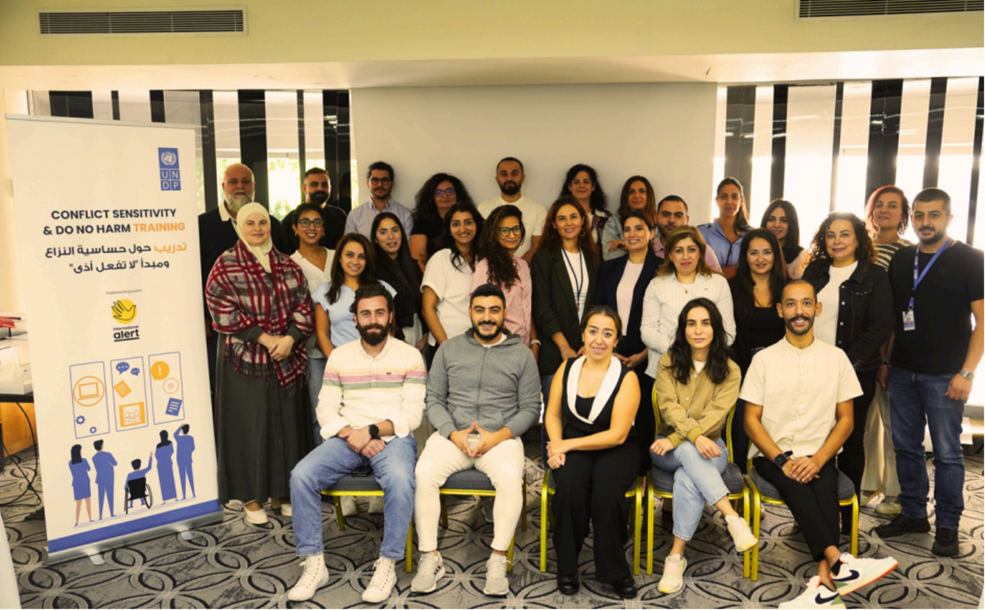
Conflict Sensitivity and Mine Action (MAG partnership): Supporting the integration of conflict sensitivity and Do No Harm approaches into mine action operations, in partnership with Mines Advisory Group, to ensure that life-saving interventions contribute to trust-building and social stability in conflict-affected areas.
Our team and presence
The Lebanon programme is supported by a core team based in Beirut, with regular field engagement in the Bekaa region, including Baalbek-Hermel and surrounding areas. Activities and field modalities are adapted in line with security conditions and access considerations.
Partners
International Alert Lebanon works with a range of national and international partners, including:
- Local civil society organisations and community-based organisations
- Women local mediators’ networks and women-led initiatives
- International and UN partners such as UN Women
- Technical partners including Mines Advisory Group
Our partnerships are grounded in localisation principles, with a strong emphasis on supporting local leadership, ownership, and sustainability.
Conflict context in Lebanon
Lebanon is facing one of the most complex crises in its modern history, shaped by prolonged economic collapse, political paralysis, and the impact of repeated cycles of conflict and war
These dynamics fuel everyday disputes at community level and heighten the risk of localised violence, particularly in conflict-affected areas. At the national and regional levels, instability in Lebanon continues to have wider humanitarian and security implications. In this context, conflict-sensitive and inclusive peacebuilding is essential to prevent escalation and support long-term stability.

Peace education in Lebanon
In Lebanon, young people face high levels of violence within education and schools, which mirror social issues seen outside of education. By working with the education sector and partners, we are supporting education and child protection actors to address social tensions and reduce violence in education.
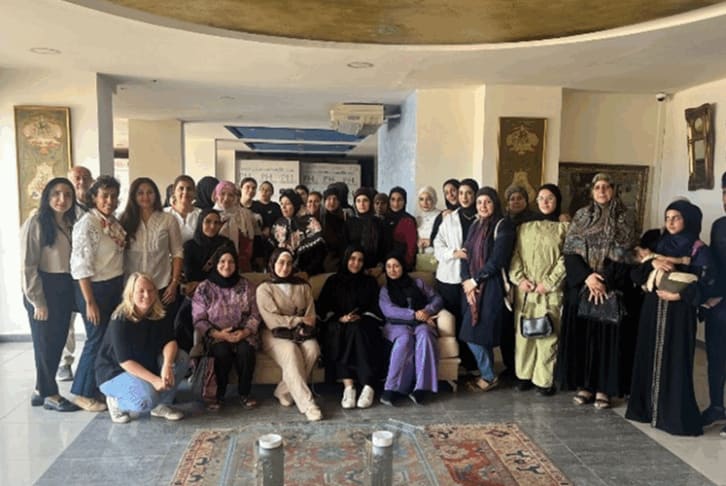
Strengthening the role of women: family-based peacebuilding in South Lebanon
Family-level dialogue and locally-led, gender-responsive facilitation can not only improve intra-family communication, but also strengthen inter-community stability and promote mutual understanding, even in one of South Lebanon’s most sensitive contexts.

Practical approaches to localisation in peacebuilding: Lebanon
This paper provides critical insights to donors, international, national and local NGOs, and civil society organisations on how to effectively support localisation in peacebuilding work in Lebanon.
Get in touch with our Lebanon team