
Building young people’s resilience to violent extremism in Mali
A project that addresses the root causes of instability and strengthens young people’s resilience to violent extremism in the Sahel.
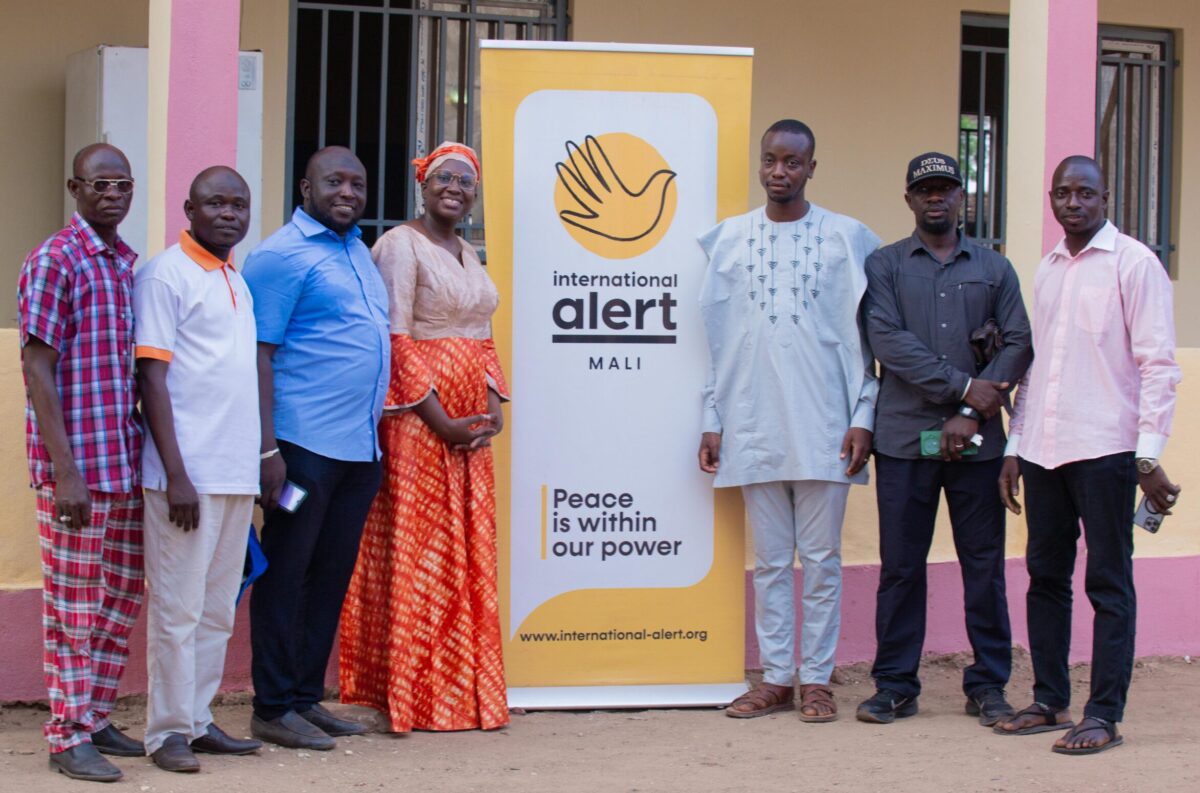
When we invest in young people’s local action and potential, they become the foundation upon which entire communities rise. (Kadiatou Keita, Sahel Hub Director, International Alert)
The Sahel is experiencing a fast-growing crisis of violent extremism. In Mali, multiple military coups, the state withdrawing from contested areas, while radical groups expand are combining to drive instability that threatens regional and even global security. Since 2012, jihadist violence has spread from north to central Mali and into Burkina Faso, displacing nearly 2 million people and killing thousands.
Extreme poverty, limited employment opportunities, and fading trust in institutions worsen tensions across society. Yet tools to resolve them legitimately and peacefully are limited – especially in areas where government authorities are no longer present and communities form self-defence groups or align with armed actors for protection. In these places, armed groups often use conflict to control territory and trade routes, capturing resource wealth that could otherwise fund schools, healthcare, and jobs.
Marginalised groups, especially young people, feel the impacts most. They are living in an environment where violence is the norm, institutions are failing, and their voices are excluded from decisions that affect their lives. When armed groups offer what governments cannot – structure, purpose, income, protection, and belonging – some young people feel they have little option but to join.
With almost 80% of the population under 35 and military responses proving insufficient, addressing the root causes of vulnerability is a security imperative for restoring stability and building young people’s resilience to violent extremism. This is what our project is working to achieve. Since September 2023, International Alert and our local partner AFAR have created spaces where young people’s potential is unlocked rather than exploited.
The context: why young people are vulnerable
- Extreme poverty and unemployment, with few opportunities to earn a living or support families
- Exclusion from local and regional decision-making
- Weak or absent government services in education, health, and justice
- Presence of multiple armed groups that offer alternative social structures and income
- Breakdown of trust between communities and security forces following years of violence and abuses
- Competition over natural resources between farming and herding communities
- Social pressures that prevent young people from achieving respected adult status through traditional means
What the project is doing to make a positive impact
The project operates across seven communes where insecurity and jihadist activity are concentrated: Mopti and Douentza in Mopti region; Segou and Tominian in Segou region; and Sikasso, Heremakono, and Koury in Sikasso region. Through three interconnected strategies, it supports young people in building economic security, a meaningful voice in decision-making, and community trust.

Helping young people develop critical thinking skills and strengthening community networks that provide alternatives to armed groups. The project establishes youth-led community forums that bring young people together to discuss security challenges, natural resource conflicts, and governance issues. Participants receive training in conflict analysis, mediation, advocacy, and leadership skills. Survivors of violent extremism share their experiences to help others recognize recruitment tactics and manipulation.

Facilitating activities where security providers, civilian authorities, traditional leaders, and young people work together on common goals. Training programmes teach security forces about international humanitarian law and the laws of armed conflict. Community organisations learn to reduce stigma against individuals who have left extremist groups, making peaceful reintegration possible. Awareness campaigns promote rule of law and address corruption and other grievances that fuel extremism.

Rehabilitating youth learning centres where young people can acquire skills and connect with peers in a positive atmosphere. Basic literacy training ensures that education barriers don’t limit opportunities. Vocational training programs provide practical skills that lead to employment. Income-generating activities give at-risk youth economic alternatives to joining armed groups. Seed funding enables young people to develop and implement their own micro-projects at the community level.
Why this approach works well to address violent extremism
Most Sahel counterterrorism efforts focus on military operations. The project focuses on its root causes instead. Unlike standalone vocational training programmes that ignore political exclusion, or dialogue initiatives without economic support, the combination of approaches used in the project addresses the problem holistically.
Rather than imposing external solutions, we centre young people as agents of change. When they lead forums, design micro-projects, and shape interventions, they demonstrate that alternatives exist – and inspire their communities.
The approach builds on International Alert’s security governance work in Mali since 2013, combined with AFAR’s deep community connections. It aligns with national prevention strategies in Mali and Burkina Faso and contributes to UN counterterrorism frameworks.
Success stories
During the first phase of the project, around 1,000 young men and women participated in it. Sanou, project participant, remembers:
Before, there was mistrust between security forces and the community, but thanks to the project’s activities, this mistrust has disappeared. Previously, young people weren’t included in security decision-making, yet they are key actors in building peace. Our community also lacked unity; everyone was focused on their own affairs. Thanks to the project’s intervention, people are now coming together to act for the good of our community.
Hear from Djibril, Hawa, and Adama, who also benefitted from seed funding as part of the economic reintegration activities and transformed their lives:
What’s next?
The project’s first phase ran through August 2025, but its impact will endure through local youth councils and community structures designed to sustain this work.
Challenges remain: ongoing insecurity, resource constraints, and deeply rooted mistrust take time to overcome. Yet the early results demonstrate that investing in young people’s agency creates ripple effects.
1,000 direct participants are already influencing nearly 138,000 community members indirectly
Meanwhile, military operations cost millions while addressing symptoms rather than causes. Each young person trained potentially prevents dozens of recruitment conversations in their network.
As young people develop leadership skills, economic opportunities, and collaborative relationships with security providers, they create change extending far beyond project activities. This approach offers a replicable model for the Sahel: security comes from empowered communities, not military force alone.
