South and South East Asia

Alert trains Nepali civil society and media in security issues

Broadening the security debate beyond the Kathmandu-centric political circles

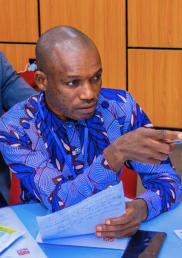
International Alert, together with partners Antenna Foundation, Equal Access, Forum for Women, Law and Development, the Institute of Human Rights Communication Nepal and Saferworld, recently held a series of trainings in Security Sector Reform (SSR) for civil society and media representatives in Nepal.

Rebecca Crozier
Fri, 21/08/2009

Philippines

Philippines

International Alert’s programme in the Philippines is based both in Manila and Davao City, Mindanao. Locally led, in both locations we seek to work with our partners to advocate for peace-positive progress to be made by the new NoyNoy Aquino administration in Manila and with a wide range of other parties on the island of Mindanao, where there have been decades of conflicts involving the MILF (Moro Islamic Liberation Front) and the Communist Party of the Philippines/National Democratic Front.

Location

Philippines
14° 36' 25.1064" N, 121° 3' 37.9656" E
Contact Person
Country Director
Pancho Lara

Strengthening the Economic Dimensions of Ex-Combatant Rehabilitation

The discharge and rehabilitation process of former Maoist Army combatants began in early 2010 with the discharge of 4,008 verified minors and late recruits (VMLRs). A UN Interagency Rehabilitation Programme was established to provide support to these individuals in the form of counselling, training and supporting job placements. To date, notable progress has been made by this programme, in particular in the numbers of VMLRs making contact with the programme through the toll-free phone line and those referred on to training providers. However, a major shortcoming of the programme to date has been its ability to provide socio-economic support to clients in the post-training period.

One key actor that was overlooked in the design of the programme was the business community. Contact between the rehabilitation programme and business community at both the national and local levels has been limited and ad-hoc in nature, a major obstacle to the success of the programme in ensuring job placements, micro-finance and mentoring support to its clients.
 

International Alert is working to strengthen the socio-economic support dimensions of the rehabilitation programme through:

  • Generating knowledge around local opportunities for rehabilitation, including attitudes of local business people towards supporting rehabilitation processes;
  • Strengthening understanding and coordination between key stakeholders to the programme, in particular the government, private sector and UNIRP at both the local and national levels.
     

Location

28° 6' 38.6964" N, 83° 58' 46.1712" E
Contact
Contact Title: 
Country Manager – Nepal
Contact Name: 
Rebecca Crozier
Location : 
Banke, Chitwan, Dang, Kailali, Kaski, Kathmandu, Morang, Nawalparasi, Parsa and Sunsari.

Income Generation for Peacebuilding: Understanding Good Practice

The government of Nepal has identified poverty and social exclusion as root causes of escalating political conflict in the country and has prioritised poverty reduction for its tenth plan. Donors, the UN and NGOs alike share a similarly broad recognition of economic inequity and social exclusion as drivers/contributors to conflict and violence, although the particular explanations for this link vary.

In response to this recognition, both the international community and the government of Nepal have invested heavily under the assumption that an emphasis on inclusive income generation or employment will contribute to peace and stability. Numerous initiatives have emerged over the years during and following conflict that seek to enhance group and individual income-generation capacity through micro-finance, self-employment and jobs-for-peace type schemes.

Beginning in May 2009, International Alert and Samjhauta Nepal began exploring the links between income generation and peacebuilding in Nepal, in particular looking at ways in which links identified could be strengthened. The project worked through new and existing income generation groups in the Morang and Kailali districts, with Alert and Samjhauta working together to provide start-up capital for new enterprises, specialised conflict sensitivity training to local facilitators, and to explore opportunities for connecting groups to district-level networks and to strengthen both economic empowerment and access to peacebuilding networks.
 

Location

28° 13' 37.092" N, 84° 1' 24.3768" E
Contact
Contact Title: 
Programme Officer
Contact Name: 
Bhasker Kafle
Location : 
<p>Kailali and Morang</p>

Supporting the Effectiveness of International Institutions in Nepal

Recent years have seen a growing number of commitments to strengthening aid effectiveness and tackling state fragility, with increasing recognition of the importance of taking the local context in conflict-affected countries into account. Despite these hard-won positive developments, there continue to be substantial internal and external challenges confronting international institutions as they seek to translate these commitments into national strategies and programming.


In Nepal, foreign aid accounted for approximately 19% of the total national budget in 2009-10. This proportion is expected to increase to approximately 25% in 2010-11. Over half of foreign aid is channelled through multinationals such as the Asian Development Bank, World Bank and United Nations. These institutions play an important role in Nepal’s development. It is therefore essential that they play this role in a way that also supports sustainable peace and does not exacerbate tensions.

Through its International Institutions Programme, International Alert in Nepal seeks to support international institutions to:

  1. Explore in depth the challenges to aid effectiveness in the transitional context;
  2. Identify practices that facilitate the production of greater peace dividends across programming;
  3. Promote the sharing of learning within and between international institutions and the wider community of stakeholders operating in Nepal and other conflict-affected contexts.
     

Location

28° 7' 48.4608" N, 84° 4' 2.5788" E
Contact
Contact Title: 
Senior Programme Officer – International Institutions
Contact Name: 
Nisha Pandey
Location : 
Nepal

State and Non-State Partnerships for Inclusive Justice

Following ten years of conflict and continued political instability, state-led provision of justice remains extremely weak. Many lack access to state justice mechanisms, due to economic, geographic or social barriers. This is particularly so for women and those belonging to marginalised and vulnerable groups who lack the resources, literacy and networks to even approach formal mechanisms. Instead, many turn to a growing number of non-state justice providers, such as indigenous systems, paralegal or mediation committees and political parties that dispense cheaper and more immediate justice.

The non-state justice sector is vibrant and growing. It plays an essential role in providing access to justice for the poor and marginalised and relieving the over-burdened state justice sector. However, in the absence of a strong state justice sector to counterbalance and oversee the non-state sector, non-state mechanisms are beginning to mediate criminal cases, superseding the criminal justice system of the state. Some traditional non-state mechanisms also deliver verdicts and punishments that do not take into account human rights and gender equality norms.

Access to justice is a fundamental human right and basic state service. In the current transition from conflict to peace, democracy and rule-of-law in Nepal, it is essential that the state is seen to deliver effective, accountable and equitable access to this basic right. Failure to do so may compound the frustrations of those marginalised from accessing this right and provide unregulated space to a number of non-state actors to take the place of the state in providing criminal justice.

We work to strengthen the effectiveness, inclusivity and accountability of the formal justice sector in responding to the needs of the Nepali people, including vulnerable and marginalised groups, by:

  1. Strengthening and creating relationships between the state and non-state justice sectors based on clarity and understanding of the roles of each sector;
  2.  Strengthening the capacity of the non-state justice sector to advocate for, support and monitor a more effective, accessible and accountable state justice sector.
     

Location

28° 6' 38.6964" N, 83° 56' 7.9692" E
Contact
Contact Title: 
Senior Programme Officer – Security And Justice
Contact Name: 
Sadhana Ghimire Bhetuwal
Location : 
Banke, Jumla, Kailali, Kathmandu, Mahottari, Panchthar and Sunsari
Donors: 
to be confirmed

Media, Information Flows and Insecurity

Just as important as the realities of crime and violence at any given moment are the information flows surrounding those realities which play a part in determining perceptions of conflict and criminal violence. Media and mechanisms for information flow in all their forms – official, informal and street rumour mills – have major impacts on levels of insecurity and prospects for peace. They can, on the one hand, drive a cycle of fear and prejudice, and in the most extreme forms, may propel people to violence. On the other hand, they can also shape public understanding of the dynamics of violence and harness or encourage peaceful ways of addressing them.

This initiative seeks to explore systems of information exchange and to examine the means through which local information and assessment of trends in violence can be transmitted to the wider public (through electronic networks of journalists, civilian leaders, government reformers and diplomats) and how these can be better supported and acted upon by international institutions.

Location

28° 11' 17.6784" N, 84° 1' 24.3768" E
Contact
Contact Title: 
Senior Programme Officer – Security & Justice
Contact Name: 
Sadhana Ghimire Bhetuwal

Promoting an Informed and Coordinated International Community Response to Security and Justice Issues

This initiative builds upon a first phase from September 2008-September 2009, which developed recommendations to improve the effectiveness of EU and international community programming and in particular the extent to which it is responsive to the needs of local populations. The second phase aims to carry forward some of these recommendations, in particular by:

  • Providing a space for coordination and discussion on key security issues for the international community in a Security and Justice Coordination Group convened every two months;
  • Bringing local experiences and needs to the attention of the donor community (in Nepal and Europe), both through the Security and Justice Coordination Group and the production of regular security and justice ‘snapshot’ briefing papers.
     

Location

28° 6' 38.6964" N, 83° 58' 46.1712" E
Contact
Contact Title: 
Senior Programme Officer – Security And Justice
Contact Name: 
Sadhana Ghimire Bhetuwal
Location : 
Bara, Dang, Jumla, Kailali, Kathmandu, Mahottari, Morang, Rasuwa and Rukum

Gender and Security Sector Reform

With increasing space at the national level for discussion on security and justice sector issues, the coming years will present significant opportunities for meaningful reform of Nepal’s security and justice system. However, the focus for now is on immediate priorities such as the future of the People’s Liberation Army (PLA) and Nepal Army. While critical, this is serving to limit any wider debate on longer-term reform processes that are inclusive and locally informed. There is a growing risk that such debates will not reflect the needs and perspectives of ordinary people and will instead reinforce institutional interests and political agendas as the primary frame of reference.

Gender is one particular consideration which risks being overlooked in any Kathmandu-centric reform process. Although a growing number of civil society organisations are now supporting wider debate on security sector reform, none of these organisations have, as yet, been able to bring a gender perspective to these debates. Furthermore, a plethora of organisations in Kathmandu are working on gender and peacebuilding. However, very few of these organisations are working on issues related to security sector reform.

Through our Gender and Security Sector Reform programme, we aim to build the capacity of civil society organisations to inform and monitor public security reform processes from a gender perspective. Specifically, the programme will:

  1. Generate knowledge on gender specific needs in relation to the provision of security and understand how these needs are (or aren’t) currently addressed in government policy;
  2. Support civil society to advocate for specific government policy changes that will improve the way gender needs are addressed in security policy.
     

Location

28° 0' 49.6836" N, 84° 6' 40.7808" E
Contact
Contact Title: 
Senior Programme Officer – Security And Justice
Contact Name: 
Sadhana Ghimire Bhetuwal
Location : 
Mahottari
Kathmandu
Rasuwa
Rukum
Project Partners: 
Shanti Malika

Maximising the Potential of the Private Sector in Public Security.

A lack of law and order is regarded as one of the biggest challenges to economic growth and recovery in Nepal. Increasing shutdowns, extortion from armed groups and labour unrest all have a negative impact upon business. An estimated 700 different bandhs (general shutdowns) were called for during 2009, the vast majority of them occurring in the Terai. The Federation of Nepalese Chambers of Commerce and Industry (FNCCI) estimates that a day’s bandh costs the industrial sector 680 million Nepalese rupees (around $9 million USD).

The private sector has a clear incentive to generate demand for a return to peace and security. Business groups also have considerable influence at the political level, through personal connections and professional networks. From a capacity perspective, however, the private sector faces limitations in advocating for improved security. We work with the Nepalese private sector to support them to:

  1. Recognise key causes of insecurity and their role in contributing to, but also potentially mitigating, these causes;
  2. Develop clear advocacy messages for improved law and order;
  3. Create and maintain broader networks and connections (e.g. with the international community, civil society etc.) in support of successful advocacy.

Location

28° 11' 17.6784" N, 83° 42' 56.952" E
Contact
Contact Title: 
Senior Programme Officer – Security And Justice
Contact Name: 
Sadhana Ghimire Bhetuwal
Location : 
<p>Bara, Bardiya, Bhaktapur, Kailali, Kathmandu, Lalitpur, Morang, Parsa and Sunsari</p>
Project Partners: 
National Business Initiative

Public Security and Justice in Nepal: Building a Constructive Role for Youth

With increasing space at the national level for discussion on security and justice sector issues, the coming years will present significant opportunities for the meaningful reform of Nepal’s security and justice system.

One key actor that is being excluded from national, state-centric debates is youth. Despite the overwhelming and highly-visible role of young people as perpetrators and victims of insecurity, the degree to which security and justice needs and provision are understood from a youth perspective remains limited.

This project seeks to build and foster a more constructive role for youth in ensuring accessible and accountable access to security and justice. It does this by:

  1. Generating knowledge and awareness amongst youth themselves of how young people experience and contribute to current security challenges and responses;
  2. Increasing the capacity of youth to advocate for the inclusion of their needs and experiences in policy-making and practice;
  3. Creating and fostering constructive avenues for youth engagement in the provision of public security and justice;
  4. Ensuring that national security and justice policy reflects the needs and experiences of youth.


Location

27° 38' 40.5816" N, 84° 11' 57.1884" E
Contact
Contact Title: 
Senior Programme Officer – Security & Justice
Contact Name: 
Sadhana Ghimire Bhetuwal
Location : 
Bara, Dang, Kathmandu, Sunsari

Participation and Obstruction: Justice and Security Sector Reform in Nepal

Participation and Obstruction: Justice and Security Sector Reform in Nepal

Rebecca Crozier and Zuleika Candan
November 2010

Security and Justice from a District Perspective: Rukum

Security and Justice from a District Perspective: Rukum

Ratna Shrestha and Nicola Williams

October 2010

Security and Justice from a District Perspective: Bara

Security and Justice from a District Perspective: Bara

Bhasker Kafle
October 2010

Security and Justice from a District Perspective: Dang

Security and Justice from a District Perspective: Dang

Rebecca Crozier and Bhasker Kafle

October 2010

Syndicate content