One woman’s journey to rebuild trust in Lebanon: Hanan’s story
While Lebanon is on the long road to recovery from war, local women mediators are using their voices for peace. Hanan Saleh is one of them. A 38-year-old mother of three, educator, and certified mediator from Tyre, South Lebanon, she is part of a network of over 130 inspiring female changemakers that prevent and resolve local conflicts across the country.
Hanan has been involved in conflict resolution and peacebuilding ever since she joined UN Women’s project “Women, Peace and Security in the Arab States” that International Alert implements in partnership with the Professional Mediation Center at University Saint Joseph.
Driven initially by curiosity and a belief that women need to be better represented in peace processes, everything she’d learned about peace and resilience turned out to be life-changing during the escalation of the war in Lebanon in September 2024. Even while fleeing her home with three children and spending 66 days displaced, Hanan continued her mediation work – supporting other displaced families, then returning to help her community rebuild not just their homes, but their capacity for peace. Local women conflict mediators have become active agents in recovery and reconciliation, using the very skills that war tested to heal the wounds it left behind.
In her own words, this is Hanan’s story.

My name is Hanan, and I am a mother, educator, and mediator. I was born and have lived my entire life in Lebanon. People often ask me how I ended up in this work, and the truth is, it found me through a combination of curiosity and calling. In 2019, a colleague at the university where I taught mentioned a project in South Lebanon. There was an open call for participants in a Women, Peace and Security programme focused on involving women more in peacebuilding, negotiations, and decision-making. As someone who has always been curious about human nature, I thought, “Why not see what this is all about?”
What I discovered was transformative. The programme offered two years of intensive training in conflict resolution, effective communication, and positive dialogue. We learned how to find middle ground between conflicting parties and how to communicate ideas with respect and openness. Most importantly, I learned to maintain neutrality – to keep distance between what’s happening around me and how I react. This skill of stepping back, of being in the mediator’s stance rather than just reacting as a human being receiving whatever is thrown at me, has become essential to navigating our challenging times.
Empathy is one of the core values that has shaped who I am today as a local mediator and peacebuilder.
The local conflicts I mediate are as varied as life itself. In our community, there’s no formal structure for people to resolve disputes other than through the courts, so cases pile up at the municipality. We work on familial mediation – divorce cases, conflicts between children and parents. In schools, we mediate between stressed teachers and students, between colleagues in workplaces. We handle neighbourhood disputes too – sometimes as simple as disputes over parking spaces or a café making too much noise.
But these surface-level conflicts often mask deeper fears. When someone gets aggressive about losing a parking spot, it’s not really about the car – it’s because we live with constant fear about security, about life and death. We’ve been in this triggered state for so long that small things become outlets for the deep-rooted generationally-inherited fears. Understanding this has been crucial to my work as a local mediator.
Empathy is one of the core values that has shaped who I am today as a local mediator and peacebuilder. Not everyone is good at dealing with their own suffering – a lot of people choose to suffer in silence or to defend themselves aggressively. But I’m a firm believer that there are alternative ways to deal with your challenges. This is where mediation and effective communication skills become particularly relevant.
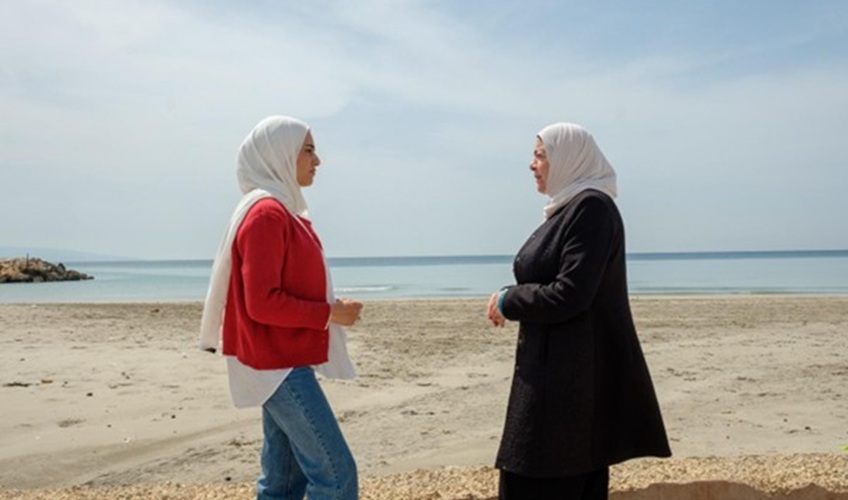
The war that escalated in Autumn 2024 changed everything and nothing. Before the intensification, we were already working with internally displaced people from the border areas who had fled to Tyre. Through collaboration with UNIFIL, we supported displaced women aged 16 to 65 in shelters, helping them navigate conflicts that inevitably arise when multiple families are crammed into school classrooms with limited resources. The first victory was simply gaining their trust – they were wounded, suspicious of associations wanting to “help.”
When the bombing intensified on September 23rd, I found myself fleeing with my three children, stuck in traffic for eight hours, trying to hold it all together. We spent 66 days displaced in Beirut with extended family. During this time, I had to shift focus from community work to my immediate circle – myself and my children. I realised that to help others, I need to nurture my own well-being. This is where my practices became lifesaving. I applied every skill I’d learned: self-coaching, breath work, mindful daily routines, connecting with nature through hikes, visiting family members purposefully. I used social media to model resilience, sharing simple tips that I found useful and that kept me up. People began reaching out, inspired to move their bodies, get off screens, show mercy to themselves. I learned that sometimes we teach best when we lead by example – people see what we do and learn more from that than from lectures.
I am choosing to be present, to be there for my community through thick and thin.
The moment we returned home, even before cleaning our own partially destroyed house, we were back in the community helping others clean up. We’re currently working on a project supported by International Alert and UN Women, continuing mediation cases because the community is more congested and tense than ever. We provide workshops on active listening, communication in times of crisis, and personalised coaching. I’ve also initiated my own programme, going to schools in communities affected by the war to support teachers who are themselves traumatised, helping them move from paralysis to action, beyond fear toward engaging with life again.
I am choosing to be present, to be there for my community through thick and thin. Sometimes we need to step outside our comfort zone. Even if I was afraid, I was showing up. Because it is not about me here, it’s about us. It’s about the well-being of the whole community. I want to bring peace to the souls of people who are suffering.
The work can be draining, sometimes heart-breaking. But people need it, and we need each other. Strong, empowered women working together become vessels that recharge one another. In a community where people are still pulling themselves together, we provide proof that humans can choose better ways forward, that we don’t have to remain broken, that soft power can heal what force has fractured.

I find the work we do as local mediators very impactful, but there are simply not that many of us to respond to the scale of the need. And what makes it even harder is a lack of awareness about who local women mediators are and what it is that they do. It’s a new concept, and people have been through a lot, and may often feel apprehensive to engage with us, especially that sensitive personal information is being collected and causing further damage.
I have witnessed war; I have been displaced; I’m living this stress on a daily basis. This lived experience gives me credibility from the people who work with me because they know who I am, that I am the daughter of this environment.
My message is simple: peace starts with the self.
The resistance we sometimes face, especially from men, saddens me because I know they need this support as much as anyone. They’re used to women supporting them in traditional roles, but mediation represents something new. I hope they come to see that we’ve always been supporting them – this is just a different way of doing it.
What keeps me going is my belief in human potential for growth. We can always learn, adapt, find better ways of handling our lives. This community has survived displacement and attack before. We’ve constantly been rebuilding, and that kind of resilience is rare. I want people to lead from this place of power rather than from victimhood or pity.
My message is simple: peace starts with the self. If I want peace, I begin by learning to manage my inner conflicts, how I respond to aggression. I’m not throwing these words from a comfortable distance – I live here, I’ve experienced what others have experienced. This makes me believe even more in the power of this message.
When we are able to connect, to address the fear that is usually the driving force behind aggression, we would be addressing more of the root causes, not just problems on the surface. Allowing others just to be who they are doesn’t mean it’s changing who I am, it’s not taking anything from me, it’s just giving space for them to express and feel heard.
Stability is very important for growth. Despite everything, we move forward. War hasn’t really stopped for us. We still hear drones, explosions. Just recently, we had to rush inside when a series of explosions happened near our house. I pray we don’t get used to seeing people’s suffering and being OK with it.
Despite it all, we’re still active, still mediating, still believing that each small action creates ripples that resonate with others who are also seeking peace, also believing in the call to choose connection over division.