Global

Climate adaptation

International Alert’s Secretary General comments on the Prime Minister’s proposed climate change fund

Taken from Dan Smith’s blog, which can be found at www.dansmithsblog.com

Dan Smith
Thu, 23/07/2009

Broadcasting for peace

Listen to Alert’s Secretary General Dan Smith in a series of interviews for radio station Passion for the Planet

Mid August to Mid September 2009

As part of our partnership with radio station Passion for the Planet you can listen to the following interviews this month:

Could overseas aid be doing more harm than good?

We might have accepted climate change as a given, but what do the rest of the world really think?

Chris Underwood
Fri, 21/08/2009

Development thinking develops

International Alert’s Secretary General comments on DFID’s White Paper and what comes next

Taken from Dan Smith’s blog, which can be found at www.dansmithsblog.com

It can be safely predicted that ideas and the terms of discussion about international development will change fundamentally in the coming five years.  A major policy statement from the UK Department for International Development (DFID) marks an important milestone on this road, though it’s a long way from being the endpoint. In this very long post, I explore the White Paper and a way of taking DFID’s logic forward.

Dan Smith
Fri, 21/08/2009

Broadcasting for peace

Listen to Alert’s experts in a series of interviews for radio station Passion for the Planet

Mid September to mid October 2009

As part of our partnership with radio station Passion for the Planet this month you can listen to the following interviews:

Why is it that some large western corporations have a negative effect on peace and yet others can be at the very heart of peacebuilding?
Are children the hidden victims of a conflict – their plight forgotten while the adults fight and then their needs ignored once peace returns?

Chris Underwood
Fri, 18/09/2009

Climate change as a threat multiplier

The double-headed risk of climate change and conflict

International Alert was recently invited to speak at the GLOBECRAFT Conflict and Climate Change Symposium hosted by the Geneva School of Diplomacy on 7 – 9 September 2009. The symposium brought together experts from the security, climate change, development and humanitarian relief sectors to discuss the emerging security implications of climate change. Participants ranged from high-level climate scientists from the Intergovernmental Panel on Climate Change, directors and advisors of relevant UN bodies and NGOs, to government ministers and CEOs of climate-related corporations.

Janani Vivekanda
Fri, 18/09/2009

Is overseas development aid working?

Alert’s Director of Programmes argues that it is time to reform overseas development aid

These are extraordinary times for those who work in overseas development. We are living through a recession of historic proportions, and yet thus far there are few overt calls for a reduction in overseas development aid. The main questions for the 2010 election will be about public spending: where to make cuts, and how deep should they be? In the past, faced with similar pressures, there would have loud and widely voiced calls for a retrenchment of overseas development assistance (ODA), and a refocusing of government priorities on issues closer to home.

Phil Vernon
Fri, 18/09/2009

Socio-economic reintegration of ex-combatants

What role for the European Union?

International Alert recently organised and hosted a roundtable discussion in Brussels on “Socio-Economic Reintegration of Ex-combatants – What Role for the European Union?”. The roundtable brought together experts, practitioners and policymakers for a lively and productive discussion about the issues and problems that arise when working towards the socio-economic reintegration of ex-combatants into post-conflict societies and communities.

Communications
Fri, 18/09/2009

Conflict Sensitivity

A training course for development and humanitarian organisations

International Alert’s Training and Learning Team recently held a four-day training course on Conflict Sensitivity for Development and Humanitarian Organisations, aimed at helping such organisations to include the “conflict” dimension into their work.

Aurelien Tobie
Mon, 26/10/2009

How much will UK development policy change under a Conservative government?

A review of the Tories Green Paper by Alert's Secretary General

The Conservative Party is set fair to win next year’s UK general election. What will happen to development policy?

Dan Smith
Thu, 29/10/2009

Broadcasting for peace

Listen to Alert's experts in a series of interviews for radio station Passion for the Planet

As part of our partnership with radio station Passion for the Planet this month you can listen to the following interviews:

Can reconciliation after conflict really work? Hear about a boy from Liberia who became friends with his father's killer and a ground-breaking peace and cultural festival that took place in the country.

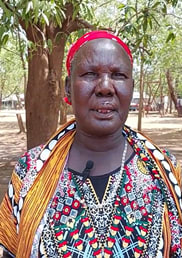
Plus, when it comes to negotiating peace, why a woman's touch often succeeds where men fail, and why some local chiefs are deferring to the women of the tribe?

Chris Underwood
Sun, 13/12/2009

Climate change, conflict and effective responses

A roundtable discussion

International Alert recently hosted a roundtable on Climate Change, Conflict and Effective Responses bringing together people from a range of think-tanks, NGOs and government departments to start a discussion on the complexities of responding to climate change in fragile and conflict-affected contexts.

Janani Vivekanda
Thu, 17/12/2009

Copenhagen: time to re-think? Or just keep thinking!

International Alert's Secretary General on COP 15

From Dan Smith’s blog, which can be found at www.dansmithsblog.com.

While thousands of negotiators, activists, diplomats, scientists, politicians and journalists meet in Copenhagen for the climate summit – formally said, the 15th Conference of Parties to the United Nations Framework Convention on Climate Change – the question has been raised whether we should want them to succeed or fail. Which, of course, begs the next question: what is success at Copenhagen?

Janani Vivekanda
Thu, 17/12/2009

Copenhagen: creating a climate for conflict?

The authors of Alert's new climate change report for ABC News

Thousands of negotiators, activists and lobbyists have descended on Copenhagen for two weeks to discuss a global deal on climate change. The high profile issues are about reducing carbon emissions and how much money the developed countries, who have the main responsibility for global warming, will put on the negotiating table to help people in poorer countries cope with the consequences. But these are not the only important issues.

Janani Vivekanda
Thu, 17/12/2009

Practice note 6: Natural Resource Governance in Conflict-Affected Contexts

Peacebuilding essentials for economic development practitioners
Holger Grundel
October, 2010
International Alert
14 pages
London, UK
978-1-906677-57-2

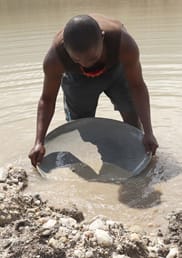
This practice note offers options for economic development planners and practitioners for promoting accountable and conflict-sensitive governance of natural resource wealth. The presence of significant natural resource endowments has been documented as contributing to the outbreak of conflict as different parties compete for control over resource-rich territory, fuelling conflict through revenues generated by extractive resources, and undermining peace processes as powerful individuals or groups refuse to give up what they regard as their fair share of the spoils.

Options for economic development planners and practitioners for promoting accountable and conflict-sensitive governance of natural resource wealth.

Publication Image

Practice note 4: Socio-Economic Reintegration of Ex-Combatants

Peacebuilding essentials for economic development practitioners
Irma Specht
September, 2010
International Alert
17 pages
London, UK
978-1-906677-55-8

This practice note explains what economic development planners and practitioners can do to support the socioeconomic reintegration of former combatants. It will assist you in your efforts to mobilise economic actors to play a constructive role in reintegration processes.

What economic development planners and practitioners can do to support the socioeconomic reintegration of former combatants.

Publication Image
Syndicate content